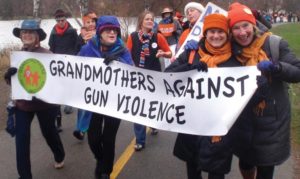
So far, it’s a state-by-state movement, with grandmothers in Seattle, in Kansas City, on Cape Cod. It began as a response to the shootings at Sandy Hook, and has been picking up momentum. Grandmothers have been marching, and meeting with state and congressional representatives to promote a saner and safer approach to guns.
Following the horrific shooting in Florida, the youngsters affected have acted like grown ups. So we nominal grown ups can follow their lead.
Some of us have memories of working on campaigns back when we were the ages of today’s high schoolers — we fought for nuclear disarmament, civil rights, women’s rights. For others, this is the first time that they have marched. Too often, they are active because the violence has marked their own families.
But orange is a good color. It keeps us visible, and links us across age and party lines. Here’s to more marching, and to more results.
 It’s been a quiet few decades on the feminism front. Grandma used to feel sad when she heard that young women didn’t want to identify with the f word, even as they took for granted changes in the work world and on the home front that we, as young women, could only dream of seeing “one day.”
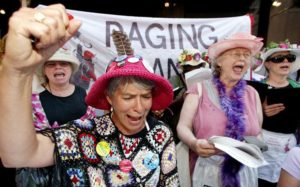 Wouldn’t we all like to be raging grannies, some days? The movement that began in Canada more than 30 years ago has spread to the U.S., the U.K., and beyond. This loosely-knit assortment of social activist specializes in writing songs of protest which they offer up at public events. Their in-your-face dress up gear, as well as their songs, take our old lady stereotypes and fling them them up in the air.
 Headlines about the AIDS crisis in Africa have diminished, but orphans who have lost their parents to the disease continue to need care. This is where grandmothers have been essential.
 You have probably heard about the threat to African elephants: 17,000 slaughtered in 2011. And grandmothers are at the center of this crisis.
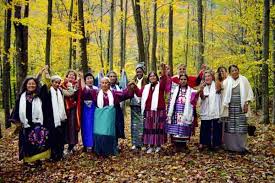 In 2004, 13 indigenous grandmothers heard the cry of Mother