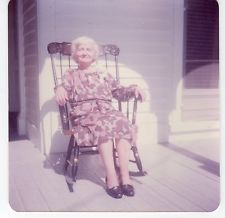
 Back before recorded history (1969 or thereabouts) an M.I.T. scientist referred to a concept he called a “grandmother cell.” Jerry Lettvin was a professor of electrical and bioengineering and communications physiology. He was also a bit of a character. He loved reducing things to their logical inconsistency. He also enjoyed taking intellectual risks. A colleague remembers him asking, “If it does not change everything, why waste your time doing the study?”
But back to the concept: In the pre-m.r.i. days, scientists wondered if they might be able to find one particular neuron that recognized one particular thing, which meant that, for each thing that we “knew,” we would have a separate neuron. Lettvin illustrated the concept with the idea of a grandmother. Would the same thing that allowed us to recognize our grandmother’s dress, for example, let us recognize a picture of her facing sideways? It was later reported that Lettvin used the grandmother example as a parody. Because everyone has one (or two)? Because we would obviously recognize our grandmother?
Fast-forward several decades. In the early years of the 21st century, with the advent of functional m.r.i.’s, researchers could see how the living brain reacted to stimuli. And the grandmother idea got some traction. Experiments showed that a pinpoint of the brain lit up when the subject saw Jennifer Aniston — a photo of her, or even her name. A different pinpoint lit up for Oprah Winfrey. This time around, scientists called it the Jennifer Aniston neuron. Interestingly, it also lit up when the subject saw a picture of Lisa Kudrow, Aniston’s co-star on “Friends.” Likewise, the Luke Skywalker neuron also fired to the image of Yoda.
This has helped scientists postulate that, while the neurons in the hippocampus respond to the concept of a particular person, they are also linked to related concepts. That means that we don’t have to remember every single detail; it is enough to link associated ideas. These “concept cells” link perception to memory. They are the building blocks of memory. And grandmothers, we know, can be bound up with memories.
Letvin’s idea of the ubiquity of the grandmother was spot on. Now we know that memories are linked to emotion.
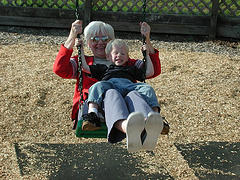 Maybe yes, if having fun is defined as being closer to their grandchildren. It may be the extension of that old saying, “A son is a son ‘till he takes a wife; a daughter’s a daughter for the rest of her life.”
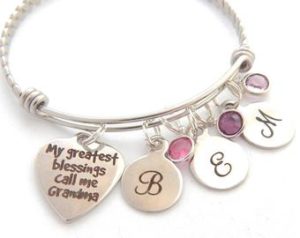 Why on earth was I surprised? My own grandmother had a bracelet with a dangling charm for each of her grandchildren. But clearly, I have not kept up with the changes in the grandma jewelry market.
 Want to watch a new grandmother splutter and try to retain her self-control? Just ask her about safety. Sure, we know that the goal is to prevent injury and save lives, but sheesh! don’t these people know when to lighten up?
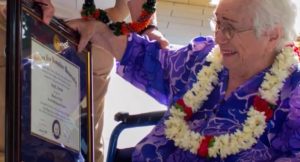 Amy Craton began her college career with high hopes, in 1962. Unfortunately, a divorce and single parenthood forced her to drop out in order to support her four children. Fast forward (maybe not so fast) half a century. In 2013, she decided to finish the degree that she had begun.
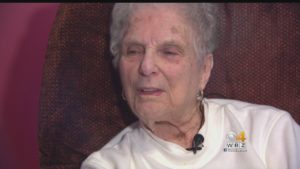 When Mary LaCava’s first grandchild went off to college, she tucked a twenty dollar bill into an envelope and, using old hotel stationery, sent it off with a short note. “I figured she could use it,” she recalled. She continued the practice every week.
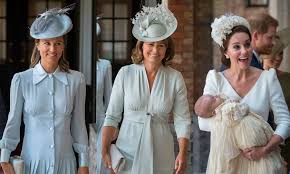 A British fashion retailer ran a survey to see who Brits thought was the most glamorous grandmother of all: do you think there was any self-interest involved?
 The crowds of young D.C. music fans show up on Sunday nights at Show Time, a dive bar that features perhaps the most unusual show in town. Granny and the Boys include three middle aged African American funk musicians, and “Granny,” 84-year-old Alice Donahue, a white, classically-trained keyboardist who never played in public before this gig that has lasted almost 20 years.
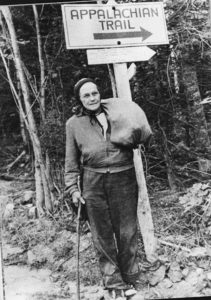 More than 60 years ago, in 1954, Emma Gatewood, a 66-year-old grandmother, equipped with sneakers, a blanket, and a plastic shower curtain, set out to hike the Appalachian Trail. She was unsuccessful. Her glasses broke, and she was forced to give up.